In 2016, Sikkim was declared as India’s and World’s first 100% organic state. The state is now a model for tourist places who want to implement sustainable tourism policies. Learn about how Sikkim set new standards and made itself free from plastic and trash.
Travellers who seek a memorable experience, Sikkim Tourism, a trusted and experienced travel planner offers exclusive Sikkim Tour Packages. These packages offer varied travel experiences (including sustainable tours and eco-tourism). Whether its customizable itineraries, accommodations, or permits assistance, Sikkim Tourism works round-the-clock to deliver a seamless trip for travellers.
A Shift in How India Travels with Sikkim Leading the Way
The tourism industry in India has been seeing a new change in travel behaviour emerging since the last couple of years. Earlier the primary focus was on choosing a travel destination and planning a trip instantly. But now there has been a new change in travel behaviour that shows tourists are now interested in how to travel mindfully (shifting the focus from mere pleasure of travelling to the impact caused by their travel).
Sustainable, mindful, and responsible tourism aren’t mere buzzwords. These are top priorities of today’s new age traveller. In today’s time travellers are not only sightseeing, but are also showing respect and care towards the environment, communities, and cultural heritage.
If there is a state in India making waves and leading the way for eco-conscious tourism, it is Sikkim, located in northeast India. Sikkim has been at the forefront of creating environment friendly policies and successfully implementing them, promoting sustainable tourism, and litter-free spaces.
Sikkim, India’s First Organic State that Laid the Foundation for Sustainable Travel
Sustainability doesn’t develop overnight, it’s a process that grows overtime by making steady and sincere efforts. The bedrock of sustainable development in Sikkim was laid by turning it into a full organic state. It means Sikkim stopped the use of synthetic pesticides and fertilisers, and switched to organic means of production and farming. There is about 760 sq km of agricultural land in Sikkim on which organic farming is practised.
Removing the dependency on chemical usage led to cleaner environments and better ecosystems. This practice had a direct positive impact on food quality, air and water quality, and overall travel experience of a person. Through gradual and consistent efforts, Sikkim was declared the first 100% organic state not just in India, but in the whole world. The organic title is taken with responsibility and using a chemical fertiliser in Sikkim is seen as a serious and punishable offence.
Being Plastic Free & Clean: Setting New Standards in Sikkim
Sikkim has given examples how strict policy implementation and serious adherence can produce visible changes on ground. Sikkim government has put a blanket ban on Single Use Plastic (SUPs) and since 2016, they have also banned plastic water bottles in meeting, functions, and gathering to reduce waste. Instead of plastic, eco-friendly alternatives like use of bamboo bottles are encouraged. Besides, mass awareness programmes are also conducted to educate public, tourists, and local businesses to keep the spaces clean and litter free.
The collective efforts made by the government and people reflect cleaner, greener, and garbage free streets which directly impact tourism. Tourists also become mindful to not litter and dispose of garbage in its assigned bins. When a tourist explores Sikkim, their first impression is how clean and organised everything looks when compared to other places in India.
Eco-Conscious Tourism Practices in Sikkim
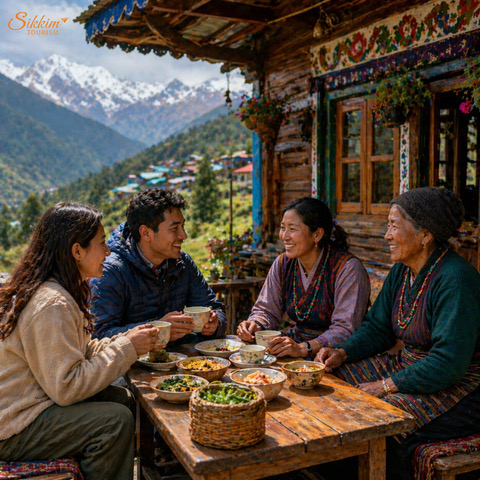
A big way to champion eco-tourism practices is to promote community driven tourism which benefits the locals of Sikkim and reduces excessive commercialisation of their state. The rise of small-scale tourism directly benefits local communities, for example: promotion of homestays, local experiences like farm tours, or taking a native Sikkim guide on hiking and trekking which helps them earn their livelihood.
Other ways in which tourists can practice eco-tourism is by:
- Eating from local eateries
- Buying handmade products instead of mass produced
- Reducing wastage of food and resources.
- Showing respect towards local customs and traditions
- Keeping the places in pristine conditions.
Rise of Mindful Travel Experience in Sikkim
Travelers aren’t visiting Sikkim just for fun, adventure and excitement. They are going to Sikkim as a chance to freshen up their minds and soothe their souls. Many travellers are choosing stargazing and peaceful nights over parties. They are more keen on spending time in nature which has healing effects on mind instead of looking for a wild nightlife. Besides, many tourists aren’t visiting Sikkim for partying or nightlife, they would rather be immersed in mindful travel and seeking peace in monasteries.
Sikkim has monasteries like Enchey, Rumtek and temples like Siddhesvar Dham which are centres of absolute peace and mindfulness. Up in North Sikkim, hamlets like Lachung and Lachen offer an immense sense of quiet which can soothe a weary soul.
Scenic Beauty in Sikkim Without Overcrowding
For those looking for pristine yet accessible places in Sikkim, plan a trip to the following places. Their tourist frequency here is lesser compared to popular hill stations.
1. Tsomogo Lake: This glacial lake is located at a height of 12,400 ft and is known for its changing colours with the shift in season. One can enjoy brahminy ducks, enjoy yak rides and photography here. Tsomogo Lake is roughly 40 km from Gangtok.
2. Gurudongmar Lake: Hailed as one of the highest lakes in India, Gurudongmar Lake is located at 17,800 ft. It is known for its crystal clear turquoise waters and is an important sight for Buddhist, Hindus, and Sikhs. The lake is known to be blessed by Guru Rinpoche, the patron saint of Sikkim.
3. Yumthang Valley: Known as “Valley of Flowers”, Yumthang Valley is located at a height of 11,693 ft. From February to early April, the valley gets covered in alpine flowers like rhododendrons, orchids, irises, poppies, and peonies.
4. Views of Kanchenjunga: The majestic views of Kanchenjunga is one of the highlights of Sikkim trip which is visible from multiple locations. One gets incredible views of Kanchenjunga mountain from Tashi Viewpoint, Pelling Sky Walk, Lachung, Yuksom, and many more.
Balancing Tourism Growth in Sikkim with Responsibility
With the growing number of tourists visiting Sikkim, it creates economic opportunities, but also puts pressure on its resources. Therefore, the role of authorities and government bodies becomes extremely crucial. By regulating the number of visitor entries in Sikkim, especially in fragile and sensitive areas, authorities can prevent damage. There is already a compulsory permit requirement to visit Sikkim which includes Tosmogo Lake, Lahung, Lachen, Yumthang Valley, Nathula Pass, and Zuluk route.
While scaling tourism sustainably, it is significant to ensure that tourism in any shape or form does not harm the ecological balance. Authorities and locals in Sikkim are trying their best to scale tourism while also protecting flora, fauna and natural resources as their top priority.
Sikkim Tourism Industry Insights
The insights from Sikkim’s tourism industry sheds light on the rise of eco-conscious travellers who want to stay at local places, participate in community-driven programmes, and follow sustainable practices as much as possible. This is seen as a positive sign amongst tourists who are adopting sustainable and responsible tourism practices, along with being mindful of local customs and traditions of Sikkim and its people.
Accessibility to Sikkim without Overexposure
Sikkim is easily accessible from Bagdogra Airport (in West Bengal) via a road trip of 123 km/4 hours. The state also has its very own airport, called Pakyong Airport but only limited airlines offer flights from one or two states. This shows the state has improved its infrastructure without excessive commercialisation.
Another way to access Sikkim is via train. The closest train stations from Sikkim are Siliguri junction and New Jalpaiguri Junction. After reaching any of the stations, visitors are expected to continue their Sikkim journey via road. This creates accessibility to Sikkim without causing much over exposure.
What Sikkim Means For Future of Travel In India
Today, the biggest challenge Indian tourist destinations are facing is littering, overtourism (domestic & foreigners), increasing pressure on natural resources, and excessive commercialisation. Sikkim stands as a model state for other places on how to implement and consistently practise sustainable tourism.
If other states follow suit, Indian tourist spots can become much cleaner and litter-free. They will start seeing a rise in experience-first travel, and people visiting these tourist places will start practising responsible tourism as a domino effect.
Conclusion
Sikkim is not just a tourist destination, it presents itself as an exemplar of sustainable tourism and presents a new way to approach travel. It shows how our travels can be clean, eco-conscious and deeply connected to nature. Looking at how Sikkim authorities and its people have conducted themselves, eco-conscious travel is here to stay.
For media inquiries, please contact https://sikkimtourism.org/ | info@sikkimtourism.org | +91 98110 66496 / +91 98100 66496